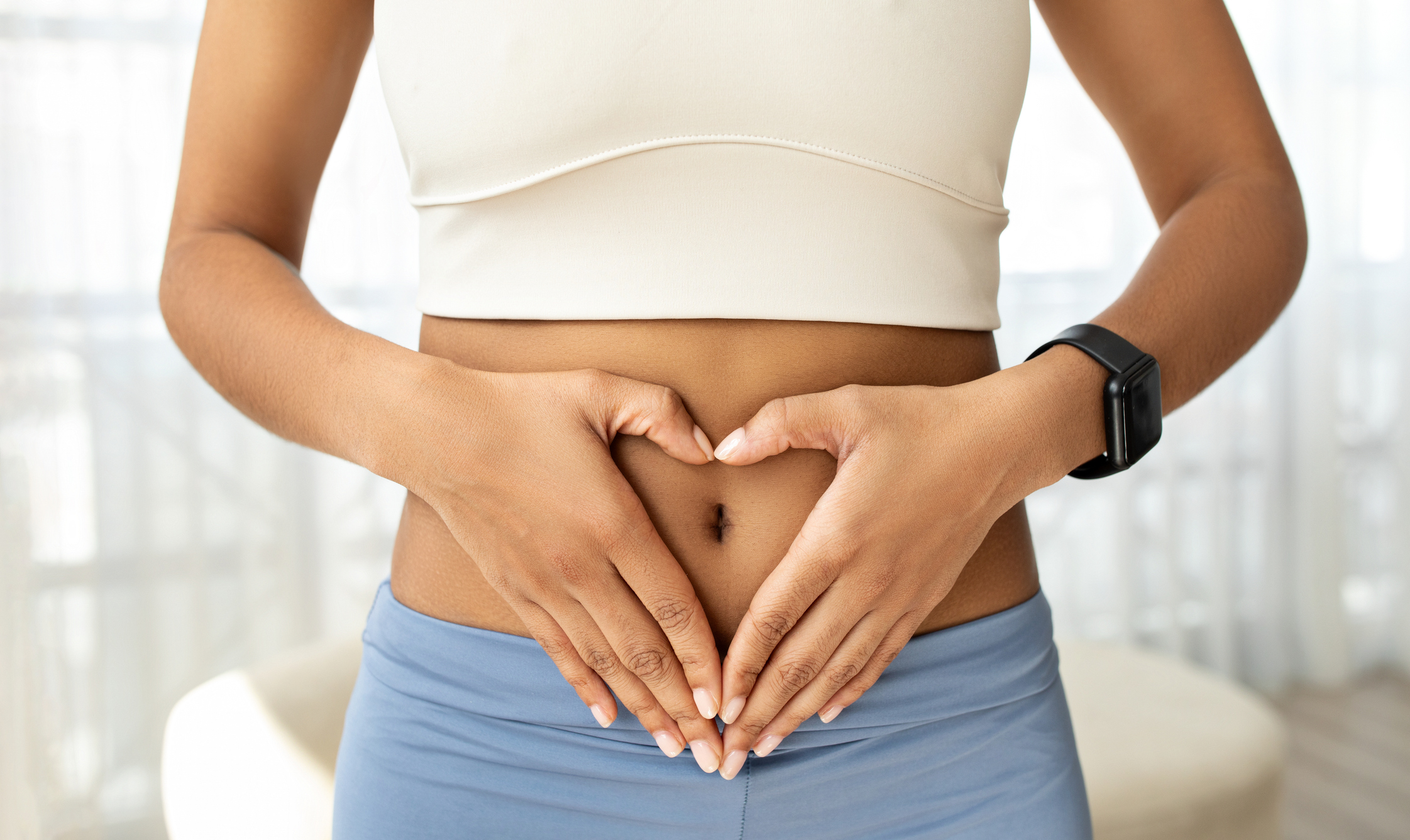
Your Gut, Your Glow: The Gut-Collagen Connection Every Woman in Her 40s Needs to Know
Why healing your gut may be the missing piece in your skin and collagen strategy
|
If you've been taking supplements consistently but not seeing the results you expect, the answer may not be in the supplement — it may be in your gut. The ability to absorb and utilise collagen peptides depends fundamentally on the health of your intestinal lining and the composition of your gut microbiome. During perimenopause, both deteriorate significantly as oestrogen falls — creating a hidden barrier between the supplement you take and the skin, joints and bones you're trying to support. This guide explains the gut-collagen axis, backed by the latest microbiome research, and shows how Dr O'Connell's Marine Collagen — formulated with bioavailability at its core — works with, not against, the perimenopausal gut. |
The Oestrogen-Microbiome-Gut Axis: A Three-Way Relationship
Your gut microbiome — the roughly 38 trillion microorganisms living in your intestinal tract — is not simply a digestive aid. It is an active endocrine organ that communicates with virtually every system in your body, including your skin. Research published in the journal Cell Host & Microbe (NIH) has established that oestrogen directly shapes the diversity and composition of the gut microbiome — meaning that as oestrogen declines in perimenopause, the microbiome changes too.
The consequences ripple outward in multiple directions simultaneously:
Microbiome Change in Perimenopause |
Mechanism |
Downstream Effect on Collagen & Skin |
Reduced microbial diversity |
Loss of oestrogen's selective growth pressure on beneficial strains |
Impaired short-chain fatty acid production; gut lining integrity declines |
Decreased Lactobacillus strains |
Lower oestrogen = less preferred environment for Lactobacillus |
Reduced production of collagen-supportive metabolites |
Increased intestinal permeability ('leaky gut') |
Tight junction proteins weaken as oestrogen declines |
Systemic inflammation increases; collagen synthesis suppressed |
Altered bile acid metabolism |
Microbiome shifts affect bile acid recycling |
Fat-soluble vitamins (E, K) less well absorbed; collagen co-factors depleted |
Elevated inflammatory signalling |
Dysbiosis allows lipopolysaccharide (LPS) into bloodstream |
Chronic low-grade inflammation directly degrades dermal collagen fibres |
|
40% Reduction in gut microbiome diversity observed post-menopause vs pre-menopause |
60% Of perimenopausal women report significant digestive changes |
2× Higher intestinal permeability in oestrogen-deficient vs oestrogen-normal women |
What 'Leaky Gut' Actually Means — and Why It Matters for Collagen
The intestinal lining is a single cell layer thick — less than a tenth of a millimetre — and depends on 'tight junction' proteins to prevent unwanted molecules crossing from the gut into the bloodstream. When these tight junctions loosen (a condition called increased intestinal permeability), bacterial fragments and partially digested proteins leak into circulation, triggering a chronic low-grade inflammatory response throughout the body.
Inflammation is one of the most potent drivers of collagen degradation. The same inflammatory cytokines (particularly IL-6 and TNF-α) that are elevated in response to intestinal permeability also activate matrix metalloproteinases — the enzymes that break down collagen in the skin, joints and connective tissue. This creates a direct pathway from gut dysfunction to accelerated visible ageing.
|
Collagen That Works With Your Gut Dr O'Connell's Marine Collagen uses hydrolysed peptides at a molecular weight designed for maximum intestinal absorption — even in the compromised perimenopausal gut. |
Why Marine Collagen Is the Smart Choice for a Compromised Gut
Here is where the form of your supplement matters critically. Standard collagen protein molecules are far too large to be efficiently absorbed through a compromised intestinal wall. Hydrolysed marine collagen peptides — at 3–5 kDa — are small enough to be absorbed even when gut permeability is suboptimal. This is not a trivial advantage; for perimenopausal women with microbiome disruption, it may be the difference between a supplement that works and one that doesn't.
The European Food Safety Authority (EFSA) scientific opinion on collagen peptides and their supporting nutrients confirms that specific hydrolysed peptide forms have demonstrated bioavailability — a regulatory acknowledgement of the superiority of this form over non-hydrolysed alternatives.
The Skin-Gut Axis: Your Complexion Reflects Your Microbiome
Dermatologists and gastroenterologists have long observed the 'skin-gut axis' — the phenomenon whereby gut conditions manifest visibly on the skin. Conditions including rosacea, eczema and adult-onset acne are all associated with microbiome dysbiosis. A review published in the journal Frontiers in Microbiology established robust bidirectional communication between gut microbiota and the skin — meaning that supporting gut health directly supports skin health, and vice versa.
For perimenopausal women whose skin is already under pressure from collagen loss and hormonal fluctuation, this gut-skin connection means that gut health is not a secondary concern — it is a primary lever for skin improvement.
Practical: How to Support Your Gut to Get More from Marine Collagen
Step 1: Reduce Intestinal Inflammation
- Eliminate or significantly reduce ultra-processed foods, refined sugars and artificial sweeteners — each of these disrupts the microbiome composition and increases LPS translocation
- Increase soluble fibre (oats, lentils, apples, flaxseed) — fermentable fibre feeds beneficial bacteria that produce anti-inflammatory butyrate
- Add fermented foods daily if tolerated: live yoghurt, kefir, sauerkraut, kimchi — these reintroduce beneficial Lactobacillus and Bifidobacterium strains
- Reduce alcohol: even moderate regular consumption increases intestinal permeability significantly within weeks
Step 2: Pair Your Collagen Supplement Strategically
- Dr O'Connell's Marine Collagen is hydrolysed to a low molecular weight specifically for superior gut absorption — take it daily for consistent delivery of Type I peptides
- Take your supplement with food rather than on an empty stomach — enzymatic activity in the gut is higher in a fed state and further aids peptide absorption
- Combine with Vitamin C either in the supplement (as in Dr O'Connell's formula) or alongside — Vitamin C is essential for intestinal collagen production as well as systemic synthesis
- Stay well-hydrated — water is essential for maintaining the mucus layer that protects the intestinal lining
Step 3: Rebuild Your Microbiome Over Time
- Prebiotic foods (garlic, onion, leek, asparagus, banana) feed your existing beneficial bacteria — aim for variety rather than volume
- Probiotic supplementation may help — look for strains with evidence in women specifically: Lactobacillus rhamnosus and Bifidobacterium longum
- Manage stress actively — cortisol directly reshapes the microbiome within 24 hours of a significant stress event
- Prioritise sleep: gut barrier repair happens predominantly during sleep; chronic sleep disruption (common in perimenopause) directly impairs tight junction function
The Combined Protocol: Gut Health + Marine Collagen for Women 40+
Time of Day |
Action |
Why It Helps |
Morning (with breakfast) |
Take Dr O'Connell's Marine Collagen in warm water or coffee |
Fed-state absorption; Vitamin C in formula activates collagen synthesis |
Morning |
Include kefir or live yoghurt with breakfast |
Reseeds Lactobacillus strains; supports gut lining integrity |
Lunch |
Include prebiotic vegetables (garlic, leek, onion) |
Feeds beneficial bacteria that produce butyrate and anti-inflammatory metabolites |
Throughout day |
2L water; herbal teas (ginger, chamomile) |
Maintains gut mucus layer; ginger reduces intestinal inflammation |
Evening meal |
Include oily fish, leafy greens, olive oil |
Omega-3 reduces gut inflammation; Vitamin K supports collagen cross-linking |
Before bed |
Wind-down routine; limit alcohol and screens |
Protects sleep quality; overnight gut repair requires deep sleep stages |
Frequently Asked Questions
How long does it take to see gut-related improvements in skin?
Microbiome changes happen relatively quickly — within 2–4 weeks of consistent dietary changes. Skin improvements reflecting those gut changes typically take 6–12 weeks to become visible, as the skin remodelling cycle is slower than the microbiome response.
Should I take a probiotic alongside marine collagen?
There is emerging evidence that specific probiotic strains support skin health and collagen synthesis — a concept sometimes called 'psychobiotic skincare'. While not yet a confirmed standard recommendation, taking a quality probiotic alongside Dr O'Connell's Marine Collagen is a reasonable and low-risk choice for perimenopausal women with digestive symptoms.
I'm bloated all the time since my late 40s — is this connected?
Almost certainly, at least in part. The gut microbiome changes of perimenopause directly affect digestive motility and gas production. Addressing this through increased prebiotic fibre, fermented foods and reduced ultra-processed food typically improves bloating within 3–6 weeks while simultaneously supporting the gut lining health that enables better collagen absorption.
Conclusion: Heal Your Gut to Maximise Your Collagen
For perimenopausal women, gut health and collagen status are not separate conversations — they are the same conversation, seen from different angles. A compromised gut microbiome creates the very inflammation that degrades collagen, while simultaneously impairing the absorption of the peptides you are supplementing with.
Starting with Dr O'Connell's Marine Collagen — in its highly bioavailable hydrolysed form — alongside targeted gut-supportive nutrition gives you the most comprehensive platform for real, visible results: stronger skin, less joint discomfort, healthier hair, and a digestive system better equipped for the decade ahead.
|
Premium Collagen, Designed for Maximum Absorption Hydrolysed for superior bioavailability. Formulated by doctors. Built for women in their 40s and 50s. |
References
1. Cell Host & Microbe / NIH — Oestrogen and gut microbiome composition
2. Frontiers in Microbiology — The skin-gut axis: bidirectional communication review
3. European Food Safety Authority (EFSA) — Collagen peptides bioavailability and health claims
4. PubMed / NIH — Oral collagen peptides and skin outcomes systematic review
5. NHS — Gut health, diet and the microbiome
© Dr O'Connell 2025 · droconnell.co.uk · For informational purposes only. Consult a healthcare professional for personal advice.