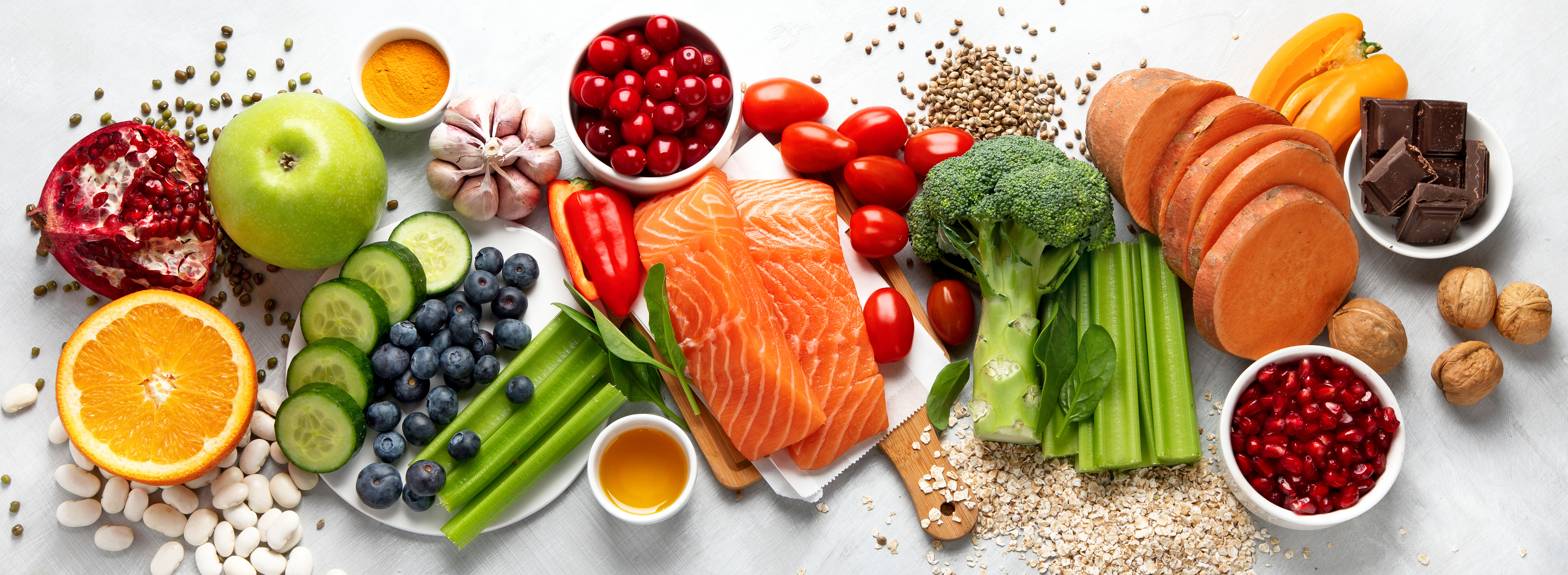
The Collagen Kitchen: Your Food Guide to Supporting Collagen Through Perimenopause
What to eat, what to avoid, and where supplementation fills the gap that food can't
|
The supplement industry sometimes makes it sound like you can bypass diet entirely by taking a capsule. That's not the full picture. And diet-only advocates sometimes suggest food makes supplementation unnecessary. That's not the full picture either. The truth for perimenopausal women is more nuanced — and more actionable: food creates the environment for collagen synthesis, while a targeted supplement like Dr O'Connell's Marine Collagen provides the direct raw material that the perimenopausal body increasingly cannot source from diet alone. This guide gives you both sides of that equation. |
Why Diet Alone Becomes Insufficient in Perimenopause
For most of your 20s and 30s, a reasonably balanced diet supplied enough collagen precursors to maintain your body's structural protein infrastructure. Your oestrogen-supported collagen synthesis machinery was doing most of the heavy lifting. By your mid-40s, two things have changed simultaneously:
- Collagen synthesis slows dramatically: falling oestrogen means the synthesis signal is weaker; even with adequate amino acids available, your fibroblasts are producing less collagen per unit of precursor than they used to
- Modern diets are collagen-poor: traditional diets (bone broth, slow-cooked meats, fish with skin) provided significant dietary collagen. Contemporary eating patterns — lean cuts, boneless fillets, plant-forward meals — have created a significant collagen amino acid gap that didn't exist in previous generations
- Gut absorption efficiency declines: the microbiome changes of perimenopause mean even the collagen precursors you do consume may be less efficiently absorbed than before
|
70% Reduction in collagen amino acids in modern diet vs traditional whole-animal diets |
40s When the dietary gap becomes critical as synthesis rate falls sharply with oestrogen |
6× More bioavailable hydrolysed peptides vs dietary collagen protein |
A comprehensive dietary analysis published through the British Nutrition Foundation confirmed that older adults — and particularly women — are systematically under-consuming the amino acids (glycine, proline, hydroxyproline) required for collagen synthesis, due to the shift away from collagen-rich whole-animal food sources. This is the gap that strategic supplementation is designed to close.
Understanding Collagen Synthesis: What Your Body Actually Needs
Collagen is not absorbed from food or supplements intact. Instead, it is broken into amino acids and peptides, which are then reassembled by your cells into new collagen fibres. For this process to work efficiently, your body needs:
Nutrient Required |
Role in Collagen Synthesis |
Best Food Sources |
Why Supplement Helps |
Glycine (amino acid) |
Most abundant AA in collagen; forms the centre of the triple helix |
Skin-on poultry, bone broth, gelatine, fish |
Modern diets rarely include collagen-rich animal parts |
Proline (amino acid) |
Stabilises the collagen helix structure; also the precursor to hydroxyproline |
Egg whites, dairy, cabbage, asparagus |
Insufficient in typical plant-forward diets |
Hydroxyproline |
Modified proline unique to collagen; signals collagen synthesis when detected |
Only found in collagen itself (dietary or supplemental) |
Cannot be obtained from non-collagen protein sources |
Vitamin C |
Rate-limiting co-factor for hydroxylation enzymes that stabilise collagen |
Citrus, kiwi, red pepper, berries, broccoli |
Stress and menopause increase Vitamin C turnover |
Zinc |
Supports fibroblast activity and collagen gene expression |
Red meat, pumpkin seeds, chickpeas, cashews |
Poorly absorbed from plant sources; common deficiency in women 40+ |
Copper |
Activates lysyl oxidase — the enzyme that cross-links fibres |
Shellfish, nuts, seeds, dark chocolate, liver |
Low in typical Western diets; inhibited by excess zinc without balance |
Hydroxyproline is particularly significant: it is found exclusively in collagen protein — you cannot get it from meat, fish, eggs or plant foods unless those foods contain connective tissue. This is the biochemical reason why taking Dr O'Connell's Marine Collagen is genuinely different from simply eating more protein.
|
Close the Collagen Gap That Diet Alone Cannot Fill Dr O'Connell's Marine Collagen delivers hydroxyproline-rich Type I peptides — the specific collagen precursors your diet is missing. Formulated by doctors for women 40+. |
The Collagen Kitchen: Foods That Support Your Supplement
The Big 5 Collagen-Supportive Food Groups
Think of these as the nutritional environment in which your collagen supplement does its best work. Without these foods, even the best supplement delivers suboptimal results.
|
1. Vitamin C Powerhouses — The Synthesis Switch Vitamin C is not optional in collagen synthesis — it is enzymatically essential. Without it, the hydroxylation step that stabilises the collagen triple helix cannot proceed, and any peptides you consume cannot be effectively incorporated into new fibres.
Aim for at least 3 Vitamin C-rich foods daily. Cooking destroys Vitamin C — include some raw sources. |
|
2. Complete Protein Sources — The Building Blocks All collagen synthesis requires a substrate of amino acids. While your marine collagen supplement provides the specialised collagen amino acids (glycine, proline, hydroxyproline), your overall protein intake determines whether your body has the broader amino acid pool to support fibroblast function, tissue repair and metabolic processes.
Target 1.2–1.6g of protein per kg of body weight daily — higher than standard guidelines, but appropriate for perimenopausal women supporting collagen turnover. |
|
3. Antioxidant-Rich Vegetables — The Collagen Protectors Producing new collagen is only half the equation. Protecting existing collagen fibres from oxidative damage and inflammatory degradation is equally important — and this is where a diet rich in diverse vegetables has a measurable protective effect.
|
Foods That Actively Destroy Collagen
Understanding what depletes your collagen is as important as knowing what supports it. These are the primary dietary collagen antagonists:
Food/Habit |
Mechanism of Collagen Damage |
Effect Severity |
Practical Action |
Added sugar & refined carbohydrates |
Glycation: glucose molecules bond to collagen fibres, creating AGEs that stiffen and fragment them |
High — cumulative and largely irreversible |
Reduce to <25g added sugar/day; eliminate sugary drinks |
Alcohol (>1 unit/day) |
Impairs liver function (collagen processed via liver); increases cortisol; disrupts sleep repair cycles |
Moderate-High — dose-dependent |
Limit to 1 unit/day maximum; at least 3 alcohol-free days/week |
Charred/burnt food |
Creates advanced glycation end-products (AGEs) that degrade collagen cross-links when consumed |
Moderate |
Avoid charring; prefer steaming, poaching, slow cooking |
Trans fats (processed foods) |
Increase systemic inflammation; disrupt cell membrane integrity in fibroblasts |
Moderate |
Eliminate margarine, commercial baked goods, fried fast food |
Very low calorie diets (<1200 kcal) |
Insufficient amino acids and co-factors; body catabolises structural protein including collagen for energy |
High during dieting period |
Never below 1400 kcal; ensure adequate protein at every meal |
The Glycation Problem: Why Sugar Ages You Faster in Your 40s
Glycation deserves particular attention for women in perimenopause. When sugar molecules bond non-enzymatically to collagen fibres — a process accelerated by high blood glucose — they create Advanced Glycation End-products (AGEs). These cross-links stiffen collagen fibres, making them less resilient and more prone to damage. AGEs also activate receptors (RAGE) that trigger inflammatory cascades which further degrade surrounding collagen.
The rate of glycation increases with blood sugar level and duration of exposure. During perimenopause, insulin sensitivity often decreases — meaning blood sugar spikes from carbohydrate intake are higher and more prolonged than they were in your 30s. This makes sugar's collagen-damaging effect more acute in exactly the population whose collagen is already under hormonal pressure.
The practical implication: reducing sugar intake in your 40s has a disproportionately large benefit for collagen preservation compared to the same reduction in your 20s — because you are removing the accelerant from a fire that is already burning faster due to hormonal change.
A Week on the Collagen Kitchen Plate
This is not a rigid meal plan — it is a template for the nutritional pattern that best supports collagen synthesis in perimenopausal women, built around the principles above:
Meal |
Collagen-Smart Choice |
Key Benefit |
Breakfast |
Greek yoghurt with kiwi, blueberries, mixed seeds + Dr O'Connell's Marine Collagen in warm water alongside |
Proline from yoghurt; Vitamin C from kiwi; zinc from seeds; collagen peptides from supplement |
Mid-morning |
A small handful of mixed nuts (walnuts, cashews) + green tea |
Copper and zinc from nuts; EGCG in green tea inhibits MMP collagen-degrading enzymes |
Lunch |
Salmon fillet (skin-on) with roasted red pepper, spinach, olive oil dressing |
Complete protein + omega-3; maximum Vitamin C from pepper; antioxidants from spinach |
Afternoon |
Apple slices with almond butter |
Quercetin in apple skins protects collagen from glycation; Vitamin E from almond butter |
Dinner |
Slow-cooked chicken thighs (skin-on) with sweet potato, broccoli, garlic, turmeric |
Hydroxyproline from skin; beta-carotene; sulforaphane; anti-inflammatory turmeric (curcumin) |
Evening (if hungry) |
Chamomile tea + 2 squares dark chocolate (70%+) |
Chamomile reduces cortisol; cocoa flavanoids protect skin collagen; copper from chocolate |
Frequently Asked Questions
Is bone broth a good source of collagen?
Yes — but with caveats. Well-made bone broth (simmered for 12+ hours from quality bones) contains gelatin and collagen peptides. However, the collagen content varies enormously by recipe and sourcing, and the molecular weight is far higher than hydrolysed marine collagen peptides — meaning absorption is less efficient. Bone broth is a useful complementary food source, not a replacement for a quality supplement like Dr O'Connell's Marine Collagen.
I eat well already — do I still need a collagen supplement?
Probably yes, if you're in perimenopause. The reason is hydroxyproline: this amino acid is found only in collagen protein, not in standard dietary protein, and your body uses it both as a building block and as a biological signal to trigger collagen synthesis. Unless you are regularly consuming skin-on poultry, bone broth or similar traditional collagen-rich foods, your diet is almost certainly low in this specific precursor.
Can food alone reverse the collagen loss of perimenopause?
Food creates the optimal environment for collagen synthesis and provides the supporting nutrients — but it cannot fully offset the rate of collagen loss driven by oestrogen decline. The most evidence-backed approach for women 40+ combines a collagen-supportive diet with consistent daily supplementation of hydrolysed marine collagen peptides. Neither alone achieves what both together can.
Conclusion: Food and Supplement as Partners
The best collagen strategy for women navigating perimenopause is not either/or — it is both/and. Food provides the biochemical environment: the Vitamin C, the zinc, the copper, the anti-inflammatory protection. Dr O'Connell's Marine Collagen provides the specific raw material — hydroxyproline-rich Type I peptides — that the modern diet consistently fails to deliver and that the perimenopausal body increasingly cannot synthesise in sufficient quantities on its own.
Together, they create a nutritional framework that respects the complexity of what perimenopause does to your collagen infrastructure — and gives your body the best possible tools to maintain it.
|
Feed Your Collagen From Two Directions The Collagen Kitchen + Dr O'Connell's Marine Collagen: the evidence-based, doctor-formulated approach to collagen nutrition for women 40+. |
References
1. British Nutrition Foundation — Protein requirements and collagen amino acids in older adults
2. PubMed / NIH — Oral collagen peptides and skin outcomes: systematic review
3. EFSA — Vitamin C and normal collagen formation: authorised health claim
4. Journal of Drugs in Dermatology — Collagen supplementation and skin elasticity RCT
5. NHS — Healthy eating for women over 40 and bone health
© Dr O'Connell 2025 · droconnell.co.uk · For informational purposes only. Consult a healthcare professional for personal advice.