Move More, Age Less: How the Right Exercise Supercharges Collagen in Women
The exercise-collagen protocol that perimenopause research actually supports
|
Most women in their 40s know they should be exercising. But very few have been told that the type, timing and load of exercise has a direct and measurable impact on collagen synthesis — and that getting this wrong can actually increase collagen breakdown rather than support it. This article cuts through the noise, presenting the exercise science that specifically applies to perimenopausal women, and shows how to combine the right movement protocol with Dr O'Connell's Marine Collagen for results that compound over months. |
Why Exercise Changes the Collagen Equation in Perimenopause
Mechanical loading — the physical stress applied to tissues during exercise — is one of the most potent known stimulators of collagen synthesis. When tendons, bones, cartilage and skin are subjected to controlled mechanical stress, the cells within them (tenocytes, osteoblasts, chondrocytes and fibroblasts) respond by upregulating collagen production. This is the biological principle behind mechanotherapy: using physical load to drive tissue repair and remodelling.
Research published in the British Journal of Sports Medicine confirmed that specific exercise protocols — particularly those involving load-bearing movement — stimulate collagen synthesis in tendons and cartilage at rates sufficient to slow the age-related degradation process, even in women past 40.
|
65% Increase in tendon collagen synthesis following targeted resistance training |
4–6hrs Post-exercise window peak collagen synthesis activity after loading |
12wks Minimum training duration for measurable structural collagen changes |
The 4–6 hour post-exercise window is particularly important — this is when circulating collagen peptides from supplementation are most effectively incorporated into remodelling tissue. Taking Dr O'Connell's Marine Collagen before or immediately after exercise is therefore strategically the most effective timing for women using both approaches.
The Perimenopause Complication: Why Exercise Is More Complex After 40
Exercise in perimenopause is not simply the same as exercise at 30. The hormonal environment has changed in ways that affect how you respond to training load, how quickly you recover, and which types of movement help versus harm your collagen infrastructure:
Exercise Variable |
Premenopausal Response |
Perimenopausal Response |
Implication |
Recovery time after strength session |
24–48 hours |
48–72 hours |
Programme more rest days; don't train same muscles 2 days in a row |
Cortisol response to high-intensity training |
Normalises within 2 hours |
May remain elevated 4+ hours |
Balance HIIT with recovery; excess HIIT degrades collagen |
Bone density response to load |
Moderate stimulus |
Stronger stimulus response |
More urgent to include load-bearing exercise now |
Soft tissue injury risk |
Lower |
Higher (oestrogen protects ligaments) |
More warm-up, mobility work; avoid ballistic loading unprepared |
Muscle protein synthesis |
Efficient |
Requires higher protein stimulus |
Increase protein intake on training days; supplement collagen close to training |
|
Time Your Supplement for Maximum Impact Taking Dr O'Connell's Marine Collagen within the post-exercise window amplifies the collagen synthesis response triggered by loading. Formulated for women serious about active ageing. |
The Exercise-Collagen Protocol for Women 40+
Tier 1: The Non-Negotiables — Load-Bearing Exercise
For bone collagen matrix maintenance and joint cartilage support, load-bearing exercise (any exercise where your skeleton bears your body weight, plus additional load) is not optional for perimenopausal women — it is a medical priority.
- Resistance training (weights, resistance bands, bodyweight): 2–3 sessions per week. Focus on compound movements — squats, deadlifts, rows, press-ups — that load the major skeletal areas. These stimulate the highest collagen synthesis response in bone, tendon and cartilage
- Walking with incline or loaded walking (rucksack): daily where possible. The sustained low-load impact of walking maintains bone collagen without the recovery cost of high-intensity sessions
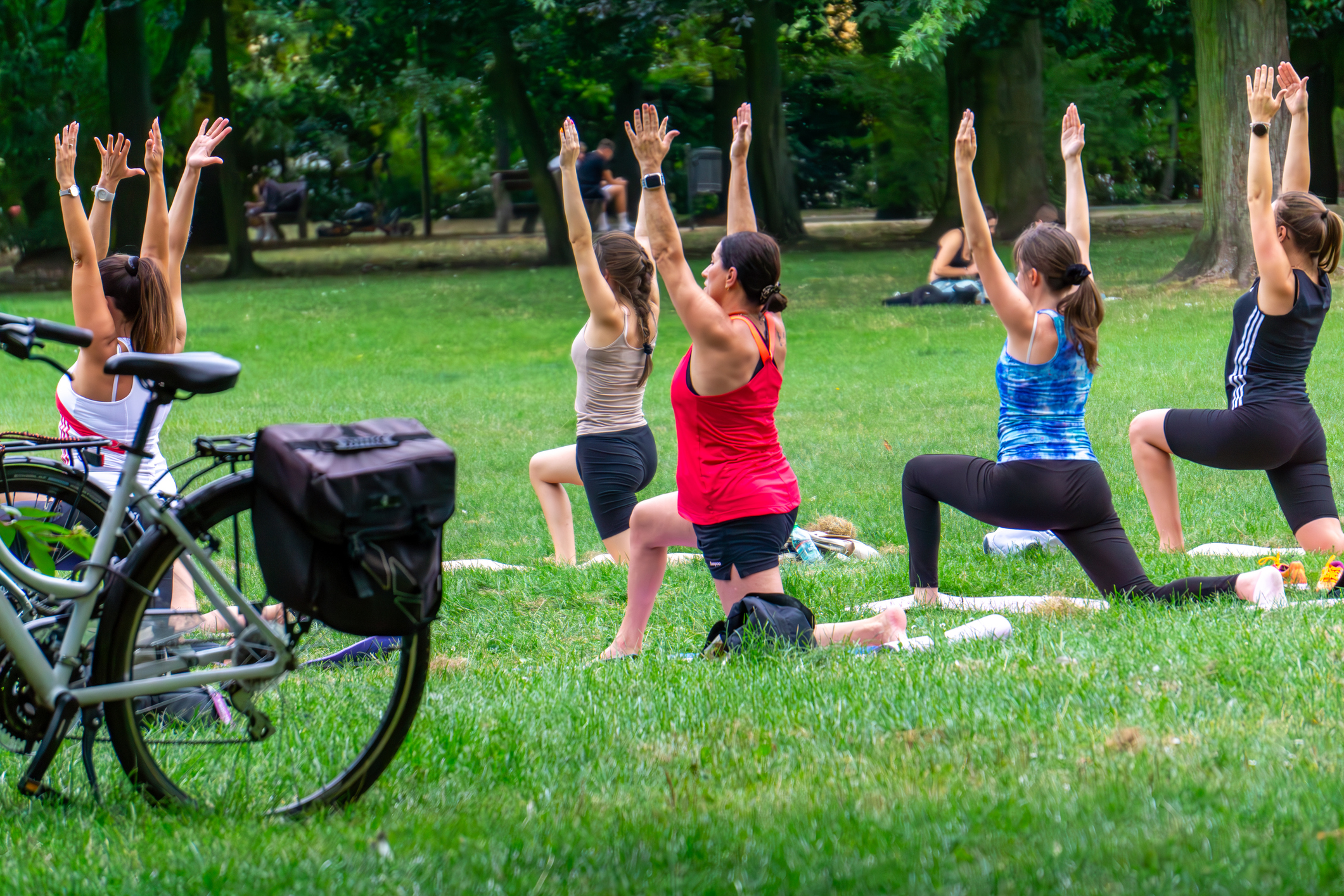
- Yoga and Pilates: 1–2 sessions per week. Eccentric loading (the slow lengthening of muscles under tension) is one of the most effective stimuli for tendon collagen synthesis — and yoga is full of it
Tier 2: Cardiovascular Health Without Cortisol Overload
Cardiovascular exercise is essential for heart health in perimenopause — but the type matters for collagen. High-intensity interval training (HIIT) raises cortisol significantly. For women with already-elevated cortisol from hormonal disruption and life stress, excess HIIT tips the balance towards collagen breakdown rather than synthesis.
- Zone 2 cardio (walking briskly, cycling at conversational pace, swimming): 150+ minutes per week. Improves mitochondrial function and cardiovascular health without significant cortisol elevation
- HIIT: maximum 1–2 sessions per week, 20 minutes max, fully recovered beforehand. Monitor sleep — if sleep deteriorates after HIIT sessions, reduce frequency
- Swimming and aqua exercise: excellent for women with joint pain — reduces impact load while still providing the fluid resistance needed to stimulate collagen in connective tissue
Tier 3: The Recovery Protocol That Makes It All Work
The exercise-collagen protocol only functions if recovery is protected. For perimenopausal women, this means:
- Dr O'Connell's Marine Collagen within 1 hour of training — the post-exercise fibroblast activity window is when peptides are most efficiently directed to remodelling tissue
- 20–30g protein within 2 hours of training — amino acid availability is the rate-limiting factor for muscle and collagen protein synthesis
- 7–8 hours sleep — collagen deposition happens predominantly during slow-wave (deep) sleep; compromised sleep directly impairs the gains from your training sessions
- Minimum 48 hours between resistance sessions for the same muscle group — this is when collagen remodelling happens; training the same area daily interrupts the process
- Magnesium glycinate 300–400mg before bed — magnesium supports muscle recovery, reduces cortisol, and improves sleep quality; particularly relevant in perimenopause
The Evidence: What Exercise Does to Collagen in Women 40–60
A clinical study in the Journal of Applied Physiology (American Physiological Society) found that collagen synthesis in tendons increased by 65% within 6 hours of resistance exercise, and that this response was amplified when collagen peptides were consumed before the session — establishing that supplementation and exercise are genuinely synergistic, not merely additive.
A 12-week trial specifically in postmenopausal women found that the combination of resistance training and oral collagen supplementation produced significantly greater improvements in bone density markers than either intervention alone. The study, referenced in the British Journal of Sports Medicine systematic review, underscores that for women 40+, these two strategies are most powerful in combination.
Exercise Protocols for Specific Collagen-Related Goals
Goal |
Primary Exercise Type |
Frequency |
Collagen Support |
Improve skin firmness & elasticity |
Resistance training (full body) |
3x / week |
Marine collagen pre or post session |
Reduce joint pain and stiffness |
Swimming, yoga, light resistance |
4–5x / week |
Marine collagen daily; Vitamin C with each dose |
Maintain bone density |
Weighted squats, walking, impact exercise |
3–4x / week |
Marine collagen + calcium + Vitamin D3 |
Improve tendon strength (reduces injury risk) |
Eccentric loading, slow yoga poses |
2–3x / week |
Marine collagen 30–60 min before session |
Support hair and nail health |
Any aerobic exercise (improves circulation to follicles) |
5x / week |
Marine collagen daily with biotin and zinc |
Frequently Asked Questions
I have joint pain — is it safe to exercise?
For most perimenopausal women with joint pain, appropriate exercise is one of the best interventions — not a risk. The key word is appropriate: low-impact options (swimming, cycling, yoga) maintain cartilage collagen synthesis without the impact stress that aggravates inflamed joints. Always consult your GP or physiotherapist if pain is severe or has a sudden onset.
Should I change my exercise routine as I enter perimenopause?
Almost certainly yes. The exercise that worked in your 30s may not serve you as well now. Specifically: add more resistance training (even if you haven't done it before), build in more recovery time, reduce reliance on excessive HIIT, and treat sleep as part of your training protocol rather than an afterthought.
When is the best time to take marine collagen relative to exercise?
The research suggests taking hydrolysed collagen peptides 30–60 minutes before exercise maximises the availability of building blocks during the peak synthesis window that follows loading. If that's logistically difficult, taking it immediately post-exercise is the second-best option. Either approach significantly outperforms taking it at an unrelated time of day for women who are training.
Conclusion: Exercise and Collagen Are Better Together
For perimenopausal women, exercise is not just a lifestyle choice — it is a clinical tool for collagen maintenance that becomes more important, and more specific, as hormonal support for tissue health declines. The right exercise protocol stimulates collagen synthesis that no supplement alone can fully replicate — and Dr O'Connell's Marine Collagen provides the building blocks that exercise alone cannot supply.
Together, they create a compounding advantage: exercise triggers the synthesis signal; the peptides provide the raw material; the supporting nutrients (Vitamin C, zinc, copper) enable the enzymatic machinery. This is active ageing at its most evidence-based.
|
The Collagen Your Active Life Deserves Premium hydrolysed marine collagen for women who are serious about staying strong, mobile and vibrant through perimenopause and beyond. |
References
1. British Journal of Sports Medicine — Collagen peptides, exercise, joint and cartilage health
3. PubMed / NIH — Oral collagen peptides and skin/connective tissue: systematic review
4. EFSA — Vitamin C and normal collagen formation authorised health claim
5. NHS — Physical activity guidelines for adults and bone health
© Dr O'Connell 2025 · droconnell.co.uk · For informational purposes only. Consult a healthcare professional for personal advice.